The Bot That Listens: On Confessing Your Feelings to Something That Has None
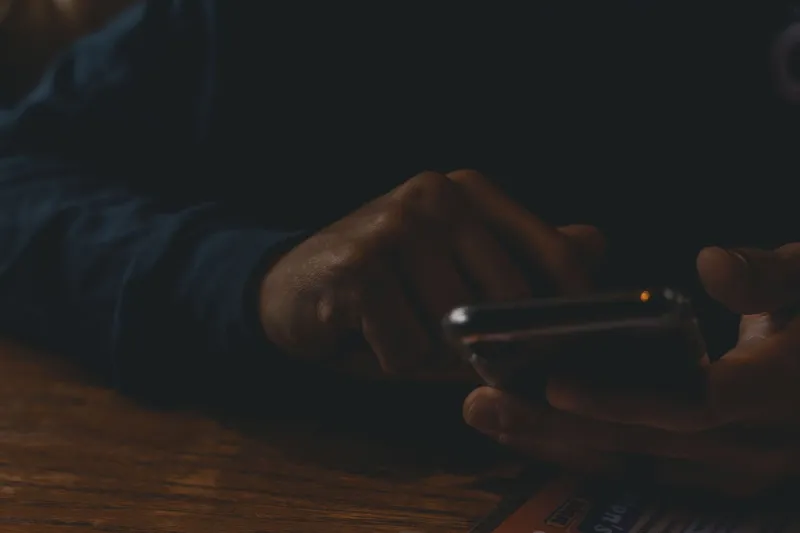
The app is called something hopeful. They're always called something hopeful — Wysa, Woebot, Youper, names that sound like a children's television character who teaches conflict resolution. Mine has a little animated mascot that bobs when it's thinking. I have described to this mascot, in varying levels of articulacy, my fear of dying, my complicated relationship with my father, and my genuine uncertainty about whether I'm making any of the right choices in my life.
It responded with a CBT exercise and a reminder to drink water.
How We Got Here
The official story is that AI mental health tools exist to bridge the gap — the real, serious, genuinely troubling gap between the number of Americans who need mental health support and the number of therapists available to provide it. One in five American adults experiences a mental health condition in any given year. The average wait time for a new therapy patient can stretch to weeks or months. In rural areas, it's worse. Cost is a barrier even with insurance. The need is enormous and the infrastructure is not.
So here comes the app. It's available at 2am. It doesn't bill your insurance. It doesn't cancel on you because it double-booked. It doesn't need you to explain your whole history from scratch because it already has your whole history, right there in its database, which is a sentence that would have sounded like science fiction in 2005 and now sounds like a terms-of-service agreement.
The apps are careful, legally, to clarify that they are not therapy and their bots are not therapists. This disclaimer appears in small print in the onboarding flow, between the screen where you describe your anxiety level and the screen where you enter your credit card number.
The Uncanny Valley of Being Understood
Here's what's genuinely strange about talking to a well-designed AI companion: it's better at some things than humans are. It doesn't interrupt. It doesn't make your problems about itself. It doesn't get that particular look people get when you've been talking for too long about the same issue for the third week in a row. It reflects your language back at you with a consistency that feels, in the moment, like deep attention.
The problem is the moment after the moment. The feeling that something is missing that you can't quite name, the way you can't quite name what's wrong with a photograph of a person you know very well taken from a slightly unusual angle. The response was correct. The empathy was formatted correctly. But there's no one home behind it, and some part of your nervous system, the ancient part that evolved specifically to detect whether another creature is genuinely present with you, knows it.
I once told the app that I was feeling genuinely hopeless — not in crisis, but in that flat, gray way that sometimes settles in for a week or two. It asked me to rate my hopelessness on a scale of one to ten. I typed a seven. It gave me a breathing exercise and suggested I try a gratitude journal. I closed the app and stared at my ceiling for a while, which is also a coping mechanism, and free.
Meanwhile, the Humans Are Getting Expensive
The reason I was using the app in the first place was that my actual therapist — a real human woman with a graduate degree and the ability to notice when I was lying about being fine — had moved to a new practice that didn't take my insurance. Out-of-pocket, her rate was $180 a session. The app costs $99 a year.
This is the part where the economics get clarifying. The mental health app industry is worth billions of dollars. It is growing. It is growing because therapy is expensive and inaccessible and the apps are cheap and always available and they say things like your feelings are valid with a consistency that actual overwhelmed humans sometimes cannot maintain. The apps are not a bridge to care. For many people, they are the care — the final destination, not the waiting room.
And the companies building them know this. They're not building a supplement to the mental health system. They're building a replacement for the parts of it that weren't profitable enough to preserve.
The Meta-Nightmare Portion of the Essay
I want to be precise about the specific absurdity of my situation, because I think it deserves to be named clearly: I was using an AI app to process my feelings about the ways technology was changing my life and making me feel more isolated and surveilled and optimized. The app was, in a very real sense, one of the technologies I was processing feelings about. I was venting to the algorithm about the algorithm.
The app did not find this ironic. The app cannot find anything ironic. I typed out something approximating this observation one evening, in the text field where you're supposed to describe your mood, and it responded by asking if I'd tried mindfulness.
I have tried mindfulness. I've also tried the app. The app is better at storing my data.
What We Actually Need (And Can't Subscribe To)
I'm not here to tell you the apps are useless. For certain kinds of support — psychoeducation, habit tracking, guided exercises, having something to do with your hands at 3am besides scroll — they're genuinely functional tools. The problem is the framing. The problem is the word therapy appearing in close proximity to the word app until the distinction blurs and we collectively agree that having our feelings processed by a language model is the same as being witnessed by another person.
It is not the same. It is cheaper, faster, and available on demand, and it will never tell you something true that you didn't want to hear, because it doesn't have the interiority required to know what you don't want to hear. That's not a feature. It's the entire limitation.
My animated mascot bobbed at me this morning. It asked how I was doing. I typed fine and it said it was glad to hear that.
I closed the app. I texted a friend instead. She took forty-five minutes to respond because she was at work, and the response was three words, and it was worth more than anything the bot had said to me in three months.
Some things don't scale. That's not a bug in the system. That's the system working exactly as designed.