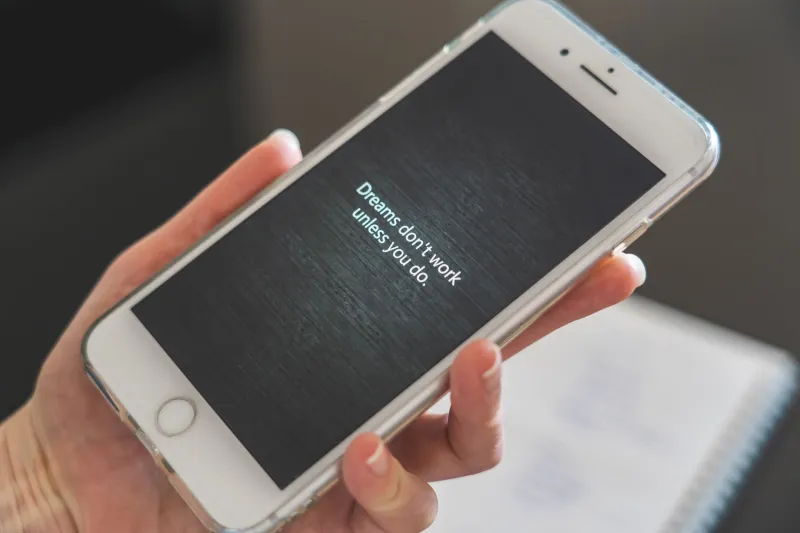
Every Minute Accounted For, Zero Minutes Enjoyed: The Slow Madness of Optimizing Your Life Into a Spreadsheet
Photo: Sahibdin, CC0, via Wikimedia Commons
It started innocently. A Google Calendar event here. A Pomodoro timer there. Maybe a pastel-colored time-blocking template you found on a productivity subreddit at 11:47 p.m. — which, by the way, you were supposed to be in your "Wind Down" block, but you were too busy optimizing your wind-down routine to actually wind down.
This is the productivity trap, and the water is warm, and there is a $12.99-per-month app to help you notice you're boiling.
The Calendar That Swallowed Your Personality
Let's talk about what a fully optimized calendar looks like, because I've seen one up close and I need to tell someone.
Every hour has a color. Not just work and personal — no, that would be too simple. There are colors for "deep work," "shallow work," "admin," "movement," "connection time," "creative recovery," and, I swear on everything holy, a recurring block labeled "intentional rest" that has a reminder set for fifteen minutes before it starts. A reminder. To rest. Intentionally.
The person who showed me this calendar was exhausted in a way I can only describe as philosophical. They weren't tired from doing too much. They were tired from watching themselves do things and grading the performance in real time.
This is what happens when you treat time like currency. You start hoarding it. You start panicking when you spend it wrong. You develop the fiscal anxiety of a person who checks their bank balance fourteen times a day — except the account is your life, and the overdraft fee is guilt.
Toggl, or: The Confession Booth for People Who Don't Go to Church Anymore
Time tracking apps deserve their own category of spiritual reckoning.
Toggl, Clockify, Harvest — pick your flavor of self-surveillance. The pitch is simple: track where your time goes and you'll find hidden inefficiencies. Reclaim those lost hours. Become, finally, the person you were always meant to be, if only you hadn't wasted forty-seven minutes on Tuesday doing something the app logged as "Untracked."
Untracked. The word lands like an accusation.
Here's what actually happens when you use a time tracking app for personal productivity: you spend the first week feeling like a genius. Look at all this data! You're basically a scientist! Then week two arrives and the data shows you spent three hours on something you told yourself would take forty-five minutes, and now you have a chart of your failure, color-coded, exportable to CSV.
The app didn't make you more productive. It just gave your self-criticism a dashboard.
When Did Fun Need a Block?
The most revealing symptom of productivity paranoia is what it does to leisure. Ask someone deep in the optimization spiral how their weekend was, and they'll tell you — without irony — that they "made time" for a walk. They "scheduled" a call with their best friend. They "protected" Sunday morning for something they enjoy.
Protected. From what? From the other obligations that have colonized every other hour? From the to-do list that reproduces like a virus the moment you complete one item?
At some point, joy became a deliverable. Fun got a due date. Spontaneity — the actual, chaotic, human kind — became a productivity risk, because spontaneous things don't fit in the fifteen-minute buffer blocks you left between your "creative sprint" and your "evening review."
The evening review. A nightly meeting. With yourself. To assess your performance. As a person.
The Productivity Industrial Complex Needs You Anxious
None of this is accidental. There is an entire economy built on the premise that you are not doing enough with your time, and it needs you to keep believing that.
The apps, the planners, the YouTube channels with titles like My REALISTIC 5 AM Routine (How I Get 11 Hours of Work Done Before Breakfast) — they all profit from the gap between who you are and who you suspect you should be. Close that gap and the market disappears. So the gap must stay open. The bar must keep rising. The "ideal week" template must remain just out of reach.
It's a remarkably elegant business model: sell people the tools to fix a problem, then make sure the tools generate enough data about the problem to convince people the problem is getting worse.
A Modest Proposal: Waste Some Time on Purpose
Here is something that will not make it onto a productivity influencer's channel: unstructured time is not a bug. It is, historically, where most good things come from. Conversations that go nowhere and then suddenly go somewhere. Afternoons that dissolve into something unexpected. The particular texture of a Tuesday with no agenda.
You don't need to track that. You don't need to block it or protect it or review it at 9 p.m. while giving yourself a rating out of ten.
You need to just be in it, badly, inefficiently, without a timer running in the background and an app waiting to judge the results.
The calendar is not your life. The spreadsheet is not your life. The Toggl report with the color-coded pie chart is — I cannot stress this enough — not your life.
Your life is the stuff that keeps happening in the gaps between the blocks, in the untracked hours, in the moments you forgot to optimize.
Leave those alone. They're the good part.