Thirty Days Without the Algorithm: A Descent Into the Chaos of Choosing Things for Myself
It started, as most bad ideas do, with confidence.
I was going to opt out. Thirty days, no recommendation engines. No Spotify's eerily accurate Discover Weekly (how does it know I'm going through something?). No Netflix's "Because you watched The Bear" carousel. No Amazon's "Customers also bought" column that has, on multiple occasions, correctly predicted purchases I hadn't consciously decided to make yet. No Instagram Explore page, no YouTube autoplay, no Google's helpful suggestions completing my sentences before I finish having the thought.
I was going to choose things myself. Like a person. Like a 1987 person, wandering into a Blockbuster with nothing but instinct and forty-five minutes before they closed.
This is the story of how that went.
Day One: Confident and Delusional
I made a playlist manually. From memory. Songs I knew I liked, chosen deliberately, arranged by me, a human with preferences and taste and an identity.
It was seventeen songs long and I'd heard all of them so many times they'd lost all meaning. By noon I was listening to silence. By 3 PM I was genuinely considering just putting on a fan noise video, which I found by searching YouTube myself, which immediately triggered the autoplay function, which I had forgotten to disable, which recommended me forty-five minutes of "brown noise for focus" and honestly I let it happen because I was already tired and it had only been one day.
I disabled autoplay. I stared at the search bar. I typed "good music" and then deleted it because that's not how music works and I felt embarrassed for myself.
Day Four Through Seven: The Browsing Problem
Here's something nobody tells you about living without recommendation engines: browsing the internet without them is like walking into a library where someone has removed all the signs and also the librarian has been replaced by a void.
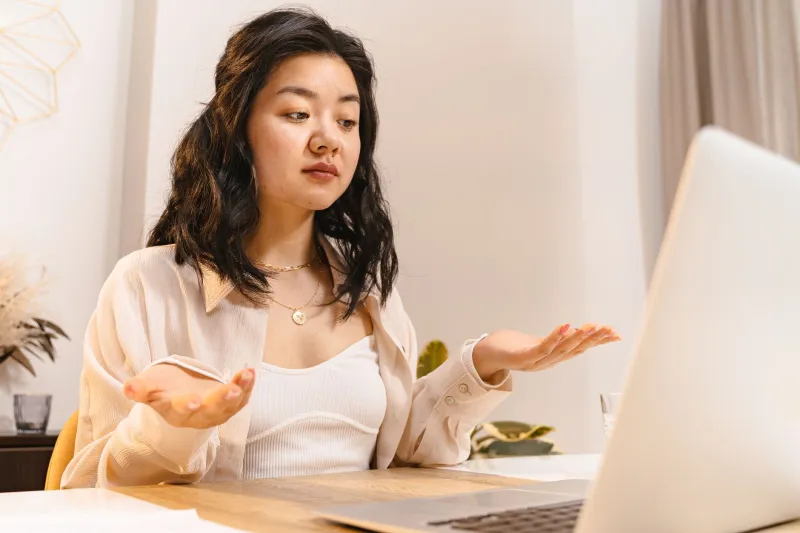
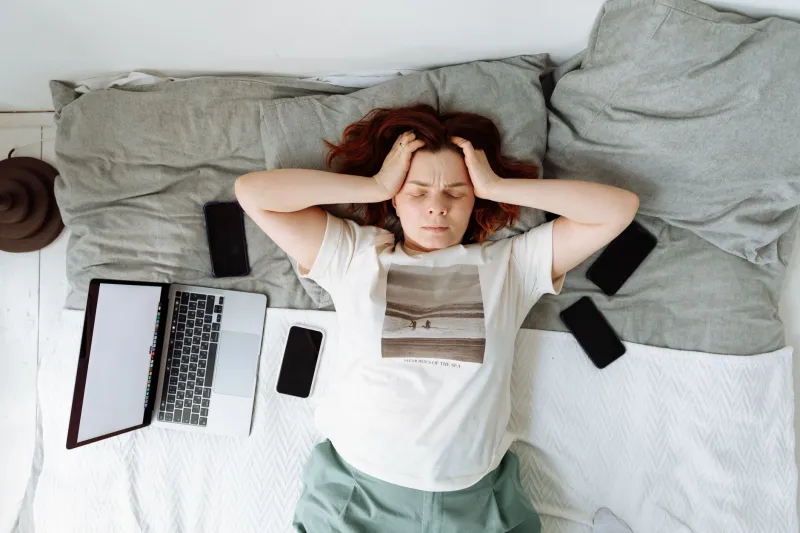
I went to find a movie to watch on Friday night. Without Netflix's suggestions, I had to go to... where, exactly? I tried Letterboxd. I looked at lists. I found a list called "Best Films of the 21st Century" with 847 entries and spent forty minutes scrolling it, reading descriptions, cross-referencing reviews, and ultimately watched an episode of a show I'd already seen because the decision fatigue had physically flattened me.
This happened four times in seven days.
The algorithm, I was beginning to understand, does not make you passive. It makes you efficient. It takes the forty-five-minute paralysis problem and compresses it into a two-minute scroll. I had been outsourcing my curation to a machine, yes — but the machine was good at it, and the alternative was me, a grown adult, standing in the metaphorical video store aisle for the rest of my natural life.
Day Twelve: The Accidental Discovery (The One Good Part)
On day twelve, something happened that I have to be honest about, because this piece requires honesty: I found something I actually loved, completely by accident, in a way that would never have happened algorithmically.
I was at a coffee shop, using their wifi because I'd convinced myself that somehow counted as "off the grid" (it does not). A playlist was playing overhead. A song came on that I didn't recognize. I asked the barista. She didn't know either. I hummed it into Shazam — which is technically an algorithm, I know, I know — and found it: a 1973 soul record by an artist I'd never heard of, who had three albums and zero Spotify playlist placements and who the algorithm had never, not once, suggested to me despite years of listening to music that should have logically led there.
I bought the vinyl on eBay. I listened to all three albums. I felt something that I can only describe as the thing we used to feel before the thing was automated.
The algorithm would never have found this for me. It optimizes for engagement, for retention, for the known quantity of your established taste. It does not wander. It does not stumble. It does not hand you something strange and say "try this, I don't know, maybe."
Day Twenty Through Thirty: Negotiating With the Machine
By the final stretch, I had developed what I can only call a working relationship with my own limitations. I was choosing some things myself. I was failing at it regularly. I was also occasionally finding something genuinely surprising by accident, which felt disproportionately thrilling compared to its objective significance.
I also cheated, repeatedly, in small ways. I let Spotify suggest one song. I watched one Netflix recommendation. I followed one Amazon link. Each time, I felt the warm, slightly shameful relief of being guided, of not having to decide, of trusting the machine to know me better than I was currently managing to know myself.
On day thirty, I sat down and thought about what I'd actually learned.
The Manifesto Part (Stay With Me)
Here's what I believe now, slightly unhinged from a month of self-imposed inconvenience:
The algorithm is not your enemy. It is your extremely efficient, emotionally unintelligent personal assistant who has read every text you've ever sent and is now trying to help you based on that data. It is good at giving you more of what you already like. It is structurally incapable of giving you something you didn't know you needed.
The problem isn't the algorithm. The problem is that we stopped maintaining the other infrastructure — the friend who texts you a song out of nowhere, the independent record store with a hand-written staff pick, the used bookstore where the organization system is essentially "vibes," the weird cable access channel you'd land on at 2 AM in 1994 showing something inexplicable that you still think about.
We didn't lose our curiosity. We outsourced it, and the contractor is fine but limited.
So here's my actual proposal, which I acknowledge is impractical and probably won't happen: keep using the algorithm. It's useful. But once a week, go somewhere it can't follow you. Ask a stranger what they're listening to. Pull a book off a shelf because the cover is ugly in an interesting way. Watch a movie because someone you trust loved it, not because a machine calculated you would tolerate it.
Reclaim your bad taste. Your weird taste. Your "I cannot explain why I love this but I do" taste. That's the part of you the algorithm can't replicate, and it's also, not coincidentally, the most interesting part.
The algorithm won the thirty days. I'm keeping my Discover Weekly.
But I'm also keeping the number of that barista's coffee shop playlist.
Not Stupid: we tried thinking for ourselves and it was a whole thing.