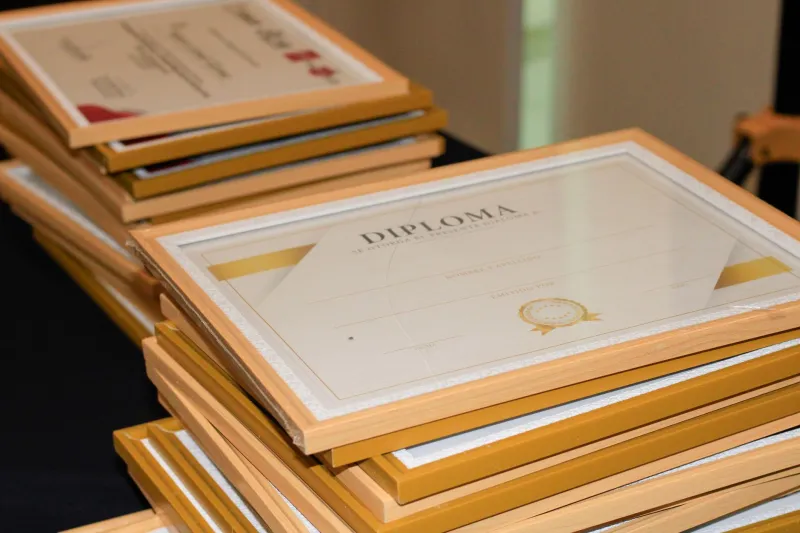
Congratulations on Your Suffering: The $2,400 Workshop That Taught Me Failure Is a Vibe

Somewhere between my second complimentary kombucha and the moment a man named Derek asked me to "cradle my most recent setback like a newborn," I began to suspect I had made a financial error.
The brochure had been so convincing. Strategic Struggle: A Two-Day Immersive Failure Lab promised to rewire my relationship with adversity, unlock the hidden curriculum inside my worst decisions, and — I'm quoting directly here — "transform your mess into your message." For $2,400, plus airfare to Scottsdale, plus the hotel that Derek's website strongly implied was "part of the experience" but was absolutely not included in the price.
I signed up because I had, by most conventional metrics, been failing at several things simultaneously. A business pivot that hadn't pivoted anywhere. A creative project that had stalled somewhere around month four. The general ambient sensation that everyone else had received a manual I'd somehow missed. The productive failure industry, which I would conservatively estimate is now worth somewhere north of $15 billion annually, was ready for exactly this moment. They'd been waiting for me, specifically, with my specific flavor of anxious overachievement and my credit card.
The Genius of Charging You to Suffer More Intentionally
Here is the central insight of the productive failure movement, delivered to you free of charge: failing is not the problem. Unexamined failing is the problem. Once you have paid a certified adversity coach to help you examine your failures in a structured environment with adequate parking, those same failures become data. They become grist. They become, in the language of approximately forty-seven different LinkedIn thought leaders, your "unfair advantage."
Derek — whose full title was "Failure Architect," printed on an actual business card I still have — explained this during the opening session while standing in front of a slide that read STRUGGLE = SIGNAL. The room contained twenty-three other people who had each paid the same amount I had. We were overwhelmingly employed, visibly anxious, and had driven rental cars from the Phoenix airport. Several people were taking notes on very nice notebooks.
The methodology, as best I could reconstruct it, worked like this: you share a failure, the group validates that the failure contained valuable information, Derek reframes the failure as a strategic choice your subconscious made on your behalf, and then everyone applauds. Repeat for two days. Catered lunch included.
What I'm describing sounds dismissive, and I want to be fair: there were genuinely moving moments. A woman named Priya talked about shutting down her restaurant during the pandemic with a rawness that made half the room cry. A guy named Todd described getting fired in a way that was clearly the first time he'd said any of it out loud. These were real people processing real pain, and watching it happen had value.
The question is whether that value was $2,400 worth, or whether it was more in the range of "a good therapist and a trusted friend" worth.
The Permission Economy
Here's what the productive failure industry is actually selling, and it's actually kind of brilliant even as it's kind of predatory: permission. Specifically, permission to have not succeeded yet, delivered by someone with enough apparent authority that you believe it when they say so.
We live in a culture that has constructed an extraordinarily efficient shame machine around achievement. The same wellness-adjacent internet that tells you to "honor your rest" also serves you a Forbes 30 Under 30 list approximately every forty-five minutes. The contradiction is not a bug. The contradiction is the product. If you never feel adequate, you will keep purchasing adequacy.
Derek and his competitors have identified a specific market niche: the person who has absorbed enough growth-mindset content to intellectually understand that failure is instructive, but who hasn't felt it yet. Who needs someone to look them in the eye in a conference room and say, "Yes, the thing that happened to you was hard, and no, it does not mean you are broken."
That's a real need. It's just not a $2,400 need. It's maybe a Tuesday-afternoon-with-a-good-friend need. It's a therapist-who-accepts-your-insurance need. It is, at a stretch, a $40 book need.
What I Actually Learned, Itemized
I don't want to be entirely uncharitable, so here is an honest accounting of what the workshop gave me:
Useful: A reframing exercise where you describe a failure in third person, which genuinely does create useful psychological distance. I've used this. It works. You can find it in any cognitive behavioral therapy workbook for $18.
Moderately Useful: The reminder that most catastrophic-feeling professional setbacks are invisible to literally everyone else, who are too busy catastrophizing their own situations to notice yours.
Questionable: Derek's proprietary "Failure Taxonomy," a laminated card sorting failures into five categories, which I have genuinely never thought about again.
Actively Counterproductive: The suggestion, delivered during the closing session, that if you weren't ready to "fail publicly and loudly" you were "still protecting a story that doesn't serve you." This is the kind of advice that sounds profound and is actually just pressure to perform vulnerability for social media.
Unexpected: The conversation I had with Priya over the catered lunch on day two, which cost nothing and was worth considerably more than the workshop.
The Uncomfortable Punchline
I flew home from Scottsdale with a folder of worksheets, a minor sunburn, and the creeping awareness that the most valuable insight from the entire weekend was one I'd arrived with: I had been avoiding the thing I was afraid of failing at, and I needed to stop doing that.
Derek didn't give me that insight. He gave me a context in which I was forced to sit still long enough to arrive at it myself. Which is, I suppose, worth something. Whether it's worth $2,400 plus the Marriott Courtyard rate is a question I have chosen, strategically, not to examine too closely.
The productive failure industry will tell you that discomfort is where growth lives. They're not wrong. They're just conveniently located at the intersection of that truth and your checking account, ready to charge you a premium for the privilege of figuring it out in a room with good lighting and adequate kombucha.
Failure, it turns out, is free. The workshop teaching you to feel okay about it is where they get you.