Five Grand Worth of Feelings: What Happens When You Pay a Stranger to Tell You to Breathe
Let me set the scene. It's a Saturday morning in early spring. I am standing barefoot in the red dirt of a luxury glamping compound somewhere outside Sedona, Arizona, wearing linen pants I did not own three weeks ago, holding a clay mug of something called "morning intention tea" that tastes like hot lawn clippings. A woman named Soleil — and yes, that is what she goes by professionally — is asking me to "locate the grief in my body."
I paid $1,400 for this. That is not counting the linen pants.
The Sales Pitch Was Immaculate
The retreat found me the way all great scams do: through Instagram. A sponsored post featuring a racially diverse group of attractive people in their late thirties, all gazing meaningfully at a sunset, promised a "three-day immersive wellness experience" designed to deliver "transformational clarity and somatic renewal." The copy was so good I screenshot it twice. Phrases like radical self-inquiry and embodied wisdom practices floated over drone footage of a canyon that looked like God's screensaver.
I was in a rut. I'm not ashamed to admit it. Work was grinding, my apartment felt like a beige waiting room for a life I hadn't started yet, and I'd been doom-scrolling at 1 a.m. with the enthusiasm of someone defusing a bomb they'd built themselves. The retreat promised to fix all of this in 72 hours for roughly the price of a used car payment.
What the landing page did not mention: the transformational clarity would come in the form of content I could have found in approximately eight minutes on the r/Meditation subreddit. For free.
The Itinerary, Deconstructed
Day one opened with a "grounding ceremony" that was, functionally, a barefoot walk. I have taken barefoot walks. I have never paid $467 per day for one. We were then guided through a breathwork session — a practice ancient cultures developed without ticketing infrastructure — led by a man named Brent who had, according to his bio, "facilitated healing for Fortune 500 executives and professional athletes." Brent wore a vest with too many pockets. Brent had opinions about your fascia.
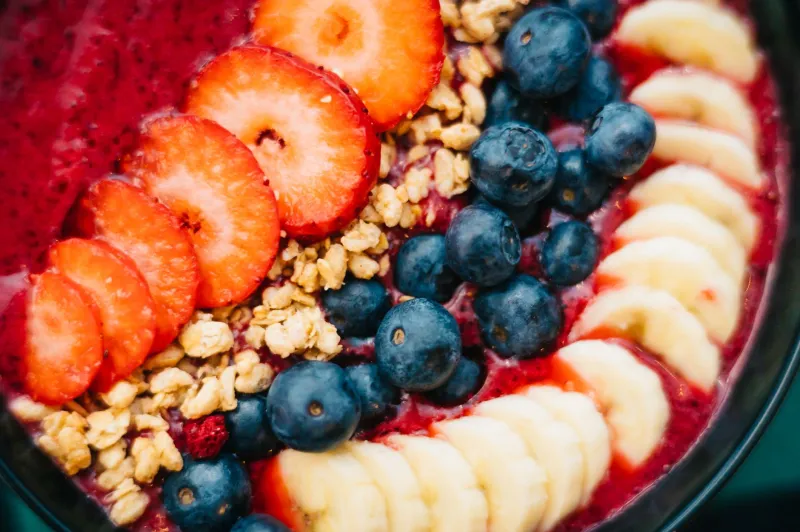
Lunch was a smoothie bowl that cost approximately $34 to produce and was arranged like a still life painting of someone's Pinterest board. It had edible flowers on it. I ate the edible flowers because I had paid to be transformed and I was going to transform every last garnish if it killed me.
The afternoon featured a "shadow integration workshop" where we were asked to write down our fears on pieces of paper and then burn them in a ceramic bowl. This is, I want to be clear, a thing you can do in your backyard with a lighter and a Post-it note. The ceremony was moving, genuinely. The markup was criminal.
The Insights Were Available Elsewhere
Here is a complete list of the transformational wisdom I received over three days, translated from retreat-speak into plain American English:
- You are harder on yourself than you would be on a friend. (True. Known.)
- Sitting quietly for ten minutes a day is good for you. (Confirmed. Also free.)
- Your phone is making you anxious. (Sir, I am aware.)
- You cannot control other people's behavior, only your response to it. (This is a bumper sticker. This is literally a bumper sticker.)
- Drink more water. (There it is.)
Soleil delivered all of this with the gravity of someone transmitting classified intelligence. To her credit, she was very good at pausing for effect. The pauses alone probably accounted for $200 of my total invoice.
The Instagram Economy of Inner Peace
Here's the part that genuinely fascinates me, now that the linen pants are in a donation bag and my checking account has mostly recovered: the retreat wasn't selling wellness. It was selling the aesthetic of transformation. Every session was staged near a view. Every meal was photographable. The welcome packet included a subtle suggestion to tag the location in your posts, which — and I cannot stress this enough — means we were paying to be unpaid marketing staff for a business that had already charged us $1,400.
The retreat industry is a $639 billion global wellness market wearing a hemp robe and calling itself spiritual. It has correctly identified that a significant chunk of American millennials and Gen Xers are overworked, underloved, and deeply suspicious that they're doing life wrong. It has also correctly identified that this demographic will pay extraordinary sums of money to have someone in a vest confirm that their feelings are valid, especially if there are mountains nearby.
None of this is an accident. The pricing is a feature, not a bug. The expensiveness is the point. If inner peace cost $12, you'd trust it about as much as a gas station sushi roll. At $1,400, it feels like medicine.
What I Actually Learned
Here's the thing I hate most about this story: some of it worked. Not the burning-paper ceremony. Not Brent. But the enforced disconnection — no WiFi, no news, no algorithm deciding what I was supposed to want — that part genuinely helped. Sleeping in a place without a to-do list tacked to the wall helped. Eating meals that someone else cooked and sitting outside afterward helped.
These are not $1,400 insights. These are "go camping" insights. These are "visit your parents and don't look at your phone" insights. The retreat industry has taken the basic human need for rest, community, and the occasional reminder that you exist outside of your job — and it has packaged that need into a premium experience with a logo and a Spotify playlist.
I drove home on Sunday afternoon feeling, genuinely, a little better. Then I checked my bank account and felt considerably worse, which I suppose canceled out. Net transformation: zero. Net cost: fourteen hundred dollars and one pair of linen pants I'll probably wear again, honestly, they're very comfortable.
Soleil, if you're reading this: the tea was terrible and I'd probably go back.
Not Stupid is a nonprofit. We cannot afford retreats. We breathe for free.