I Let a Mushroom Powder Tell Me Who I Was, and Honestly It Was Cheaper Than Therapy (It Was Not Cheaper Than Therapy)
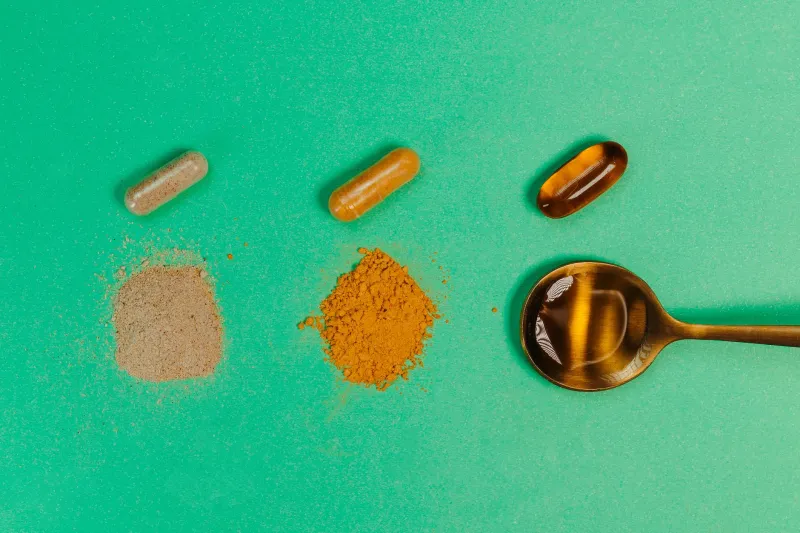
Somewhere between a sponsored Instagram reel about cortisol and a podcast ad for a supplement that promised to "support cognitive clarity, gut resilience, and something called cellular radiance," I made a decision. A bad one. A $400 one. And I made it with the full confidence of someone who had just learned the phrase adaptogenic stack and was not about to let that go to waste.
This is not a wellness story. This is a story about a very effective industry and a very susceptible human, and how those two things met in the middle of a bathroom cabinet that now looks like a GNC exploded inside a farmer's market.
The Diagnosis You Didn't Know You Needed
Here is how the pipeline works, and I say pipeline because that is exactly what it is — a smooth, frictionless chute from "I feel a little tired sometimes" to "I have adrenal fatigue, leaky gut, and an omega-3 deficiency that is almost certainly why I can't parallel park."
Step one: You are scrolling. You are always scrolling. An account with a clean sans-serif font and a woman holding a ceramic mug in soft morning light tells you that chronic inflammation is the silent epidemic no one is talking about. Everyone is talking about it. It has forty-seven million hashtags. But you feel seen.
Step two: You take a quiz. The quiz asks whether you ever feel tired, stressed, foggy, bloated, or "not quite yourself." You answer yes to several of these because you are a person alive in America in the current era. The quiz informs you that your mitochondria are basically staging a walkout.
Step three: You buy something. It costs $68 and comes in a matte black bag with a QR code that links to a blog post written by someone with "Functional Wellness Practitioner" in their bio, which is a credential that, upon research, turns out to require roughly the same licensing as becoming a notary public in most states.
Congratulations. You are now in the ecosystem.
What $400 in Mushroom Powder Actually Buys You
Let me be specific, because specificity is the only thing I have left.
I purchased: a bag of lion's mane powder (for focus, allegedly), a bag of reishi (for sleep, allegedly), a cordyceps blend (for energy, which felt redundant given the lion's mane, but the branding was very compelling), an ashwagandha tincture in a small brown dropper bottle that made me feel like an apothecary witch, and a "daily greens" powder that tasted like someone blended a lawn and charged me forty-five dollars for the privilege.
I also bought a red light therapy panel, but that's a separate financial wound I'm not ready to discuss.
Did any of it work? Here is my honest, considered, non-sponsored answer: I don't know, and that's sort of the genius of the whole thing. Wellness products exist in a beautiful epistemic fog where the placebo effect is real, the clinical evidence is thin, and the testimonials are endless. If you feel better, it worked. If you don't feel better, you're not being consistent enough, or you need to add magnesium glycinate, or Mercury is in retrograde and your cortisol is compensating.
You cannot lose. Except financially. You lose financially.
The Language Is Doing a Lot of Heavy Lifting
There is a specific dialect spoken fluently by the wellness industrial complex, and once you learn to hear it, you cannot unhear it. Words like support, optimize, nourish, and restore appear constantly — and importantly, they appear instead of words like treat, cure, or prevent, because those words require FDA approval and the wellness industry did not get this far by inviting that kind of scrutiny.
Your gut doesn't have a problem. It has an imbalance. Your brain isn't fine. It's not yet optimized. You're not tired because you worked a fifty-hour week and stare at a screen for most of your waking life. You're tired because your cellular energy production pathways need support.
The language is engineered to make you feel like you are one subscription box away from becoming a person who wakes up at 5 a.m. and genuinely enjoys it. This is, to be clear, not a person. This is a content format.
The Uncomfortable Part
Here's where I'm supposed to tell you I woke up, threw the powders away, and fixed my life through free, evidence-based interventions like sleep, exercise, and not eating gas station sushi at eleven o'clock on a Tuesday.
And I did do some of that. But I also, two weeks after writing the first draft of this piece, purchased a new mushroom coffee blend because a newsletter I respect mentioned it offhandedly and the packaging was extremely good and I have apparently learned nothing.
This is the part the wellness industry is counting on. The cycle doesn't end with disillusionment. It ends with re-enrollment. You don't stop buying supplements because you realized they didn't work. You stop buying those supplements and start buying better ones, recommended by a slightly more credentialed influencer with a slightly more expensive matte bag.
The cure for feeling stupid about your wellness purchases is, structurally and inevitably, a different wellness purchase.
What I Actually Know Now
I know that the wellness industry in the United States is worth somewhere north of $480 billion, which is a number that should give everyone pause. I know that "adaptogen" is not a regulated term. I know that most of these products are not required to prove they do anything before they're sold to you, which is a fun feature of the supplement market that exists specifically because the industry lobbied very hard for it in 1994 and has been thriving ever since.
I also know that I am not broken. I was never broken. I was a normal person with normal human fatigue living in an abnormal amount of ambient stress, and an entire industry exists to intercept that feeling before it can resolve into something boring and free, like going outside or calling a friend.
The mushroom powder is still in my cabinet. I'm not throwing it out. I paid $68 for it.
But I'm thinking about it differently now. Less like medicine. More like a very expensive reminder that the most profitable thing a company can sell you is the belief that you needed them in the first place.
And if that realization makes me feel a little depleted, well. I know a guy with a tincture.