The Night I Strapped $847 Worth of 'Science' to My Face and Slept Worse Than a Toddler on Halloween
The Night I Strapped $847 Worth of 'Science' to My Face and Slept Worse Than a Toddler on Halloween
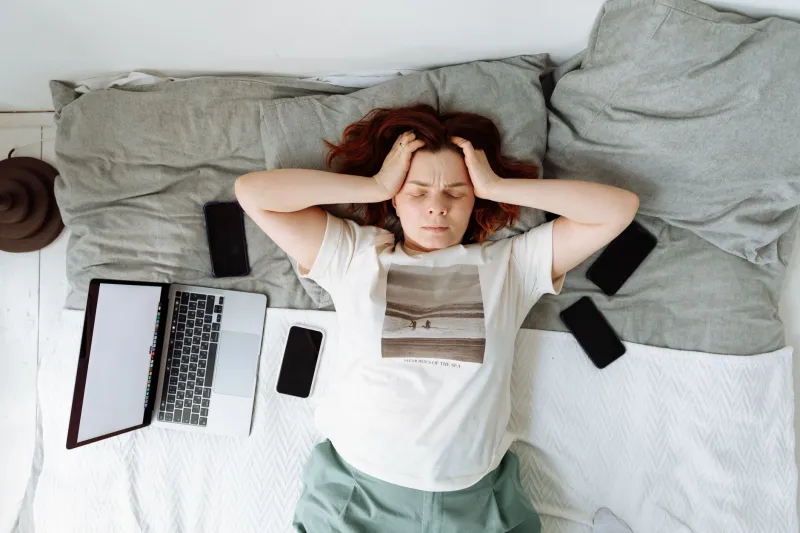
Let me paint you a picture. It's 2:47 a.m. I'm flat on my back in complete darkness except for the soft blue pulse of a sleep-tracking wristband, the amber glow of a "circadian-optimized" salt lamp I definitely did not need, and the faint green blink of a Bluetooth sleep mask that cost more than my first car's monthly insurance payment. My phone is face-down on the nightstand, running three separate sleep apps that are all, in real time, disagreeing about whether I'm in REM sleep or just "stressed."
I am not asleep. I have not been asleep in what feels like a geological epoch. But I am, technically, optimized.
How a Normal Person Becomes a Sleep Tech Goblin
It started, as all great American self-destructions do, with a podcast. Specifically, one of those three-hour episodes where a guy with a suspiciously symmetrical jaw explains that you've been sleeping wrong your entire life, your ancestors slept wrong, and the only path to cognitive peak performance is a complete overhaul of everything you do between 10 p.m. and 6 a.m.
I was tired. Not metaphorically. Genuinely, bone-deep tired — the kind of tired that makes you click "Add to Cart" on things with names like the SomnoWave Pro Elite without reading a single review.
The SomnoWave Pro Elite, for the record, is a sleep mask. But not just a sleep mask. It delivers "precision-pulsed photonic stimulation" to your eyelids, plays "neural-entrainment soundscapes" through embedded bone-conduction speakers, and syncs with an app that generates a personalized "sleep architecture report" every morning. It also makes you look like a villain in a mid-budget sci-fi film who is about to download someone's memories against their will.
It cost $847.
I bought it at 1 a.m., which, in retrospect, should have been my first clue that my judgment was not operating at peak performance.
The Gadget Lifecycle, Explained by Someone Living It
Here is what nobody tells you about entering the wellness tech pipeline: it is not a purchase. It is a subscription to a worldview. The SomnoWave didn't just arrive in a box — it arrived with an ecosystem. The mask needed the app. The app needed a premium tier to unlock "advanced sleep scoring." The advanced sleep scoring kept telling me my "sleep efficiency" was 61%, which apparently meant I needed a smart pillow to track head position.
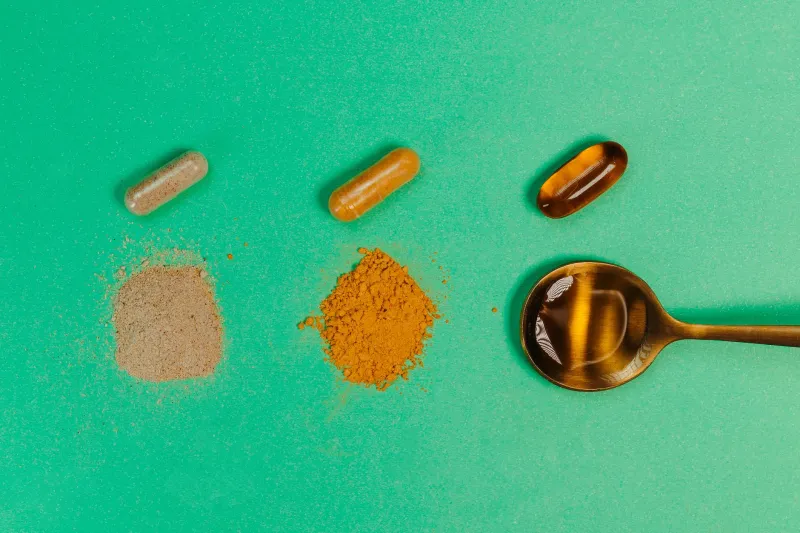
The smart pillow — $189, memory foam, embedded with pressure sensors — told me I was a "restless sleeper," which the app helpfully noted could be caused by "suboptimal magnesium levels." There is a magnesium supplement for that. There is always a supplement for that. It came in a matte black pouch with the word RECOVER printed on it in a font that suggested military operations.
By month two, my nightstand looked like the staging area for a NASA mission, and I was averaging five hours and forty minutes of fragmented, app-documented, thoroughly analyzed terrible sleep.
The Anxiety Loop Nobody Advertises
Here's the thing the wellness industrial complex has figured out that your doctor probably hasn't gotten around to mentioning: anxiety about sleep is more profitable than sleep itself.
Every device I bought gave me more data. More data gave me more things to worry about. More things to worry about gave me worse sleep. Worse sleep gave me a reason to buy the next device. It is a perpetual motion machine powered entirely by cortisol and venture capital.
The sleep score became a number I checked before I checked my blood pressure, my texts, or the general state of American democracy — which, granted, is also not helping anyone sleep. A bad score didn't just mean I was tired. It meant I had failed. At sleeping. The thing humans have been doing successfully, without Bluetooth, for approximately 300,000 years.
At some point I bought a "dawn simulation alarm clock" that cost $130 and gradually brightened my room over thirty minutes to mimic a natural sunrise. I live in an apartment with blackout curtains I installed specifically so the actual sunrise wouldn't wake me up. I had, in effect, paid $130 to recreate a problem I had paid $60 to solve.
What the Algorithm Knows That You Don't (It's Nothing)
I eventually did what I should have done at the start and talked to an actual sleep doctor. A human one, with a medical degree, who did not have a Shopify store.
She asked me a few questions. Was I looking at screens late at night? (Yes, to check my sleep scores.) Was I drinking caffeine after 2 p.m.? (Sometimes, to compensate for the bad sleep scores.) Was I lying awake worrying about whether I was sleeping correctly?
She did not ask about my photonic stimulation mask. She seemed, professionally, unbothered by its existence.
Her recommendations were: consistent wake time, less screen time, cooler room, no caffeine after noon. Total cost: the price of a co-pay and the mild humiliation of admitting I had spent nearly a thousand dollars on a glorified blindfold.
Within two weeks of following advice that has existed since before the internet was invented, I was sleeping better than I had in a year.
The Actual Product They're Selling
The sleep tech industry doesn't sell sleep. Sleep is free. What they sell is the feeling that you are doing something about your life — that you are a person of action, a self-optimizer, someone who takes their biometrics seriously. In a culture that treats exhaustion as a personality trait and productivity as a moral virtue, buying expensive gear is how you signal that you're fighting back.
The tragedy is that the fighting makes you more tired.
All those devices are still on my nightstand. I use the salt lamp sometimes because it looks nice. The SomnoWave Pro Elite is in a drawer next to a Fitbit from 2019 and approximately forty percent of a magnesium supplement that tastes like chalk dissolved in ambition.
I sleep fine now. Seven hours, usually. No scores, no reports, no photonic anything.
My sleep efficiency, according to no app whatsoever, is excellent.
Not Stupid is thinking for people who've given up on thinking, so you don't have to do it at 2:47 a.m. while wearing a $847 mask.